Mimi Hearing Technologies · Berlin · 2014–2017
A hearing test
people finish.
- Role
- Senior designer in a UX/UI team of three, first employee
- Scope
- User research, product and interface design, versions 0.1 to 4.0
- Outcome
- More than 1.5 million people used it. CE-certified medical device.
01 · The problem
Most people quit halfway.
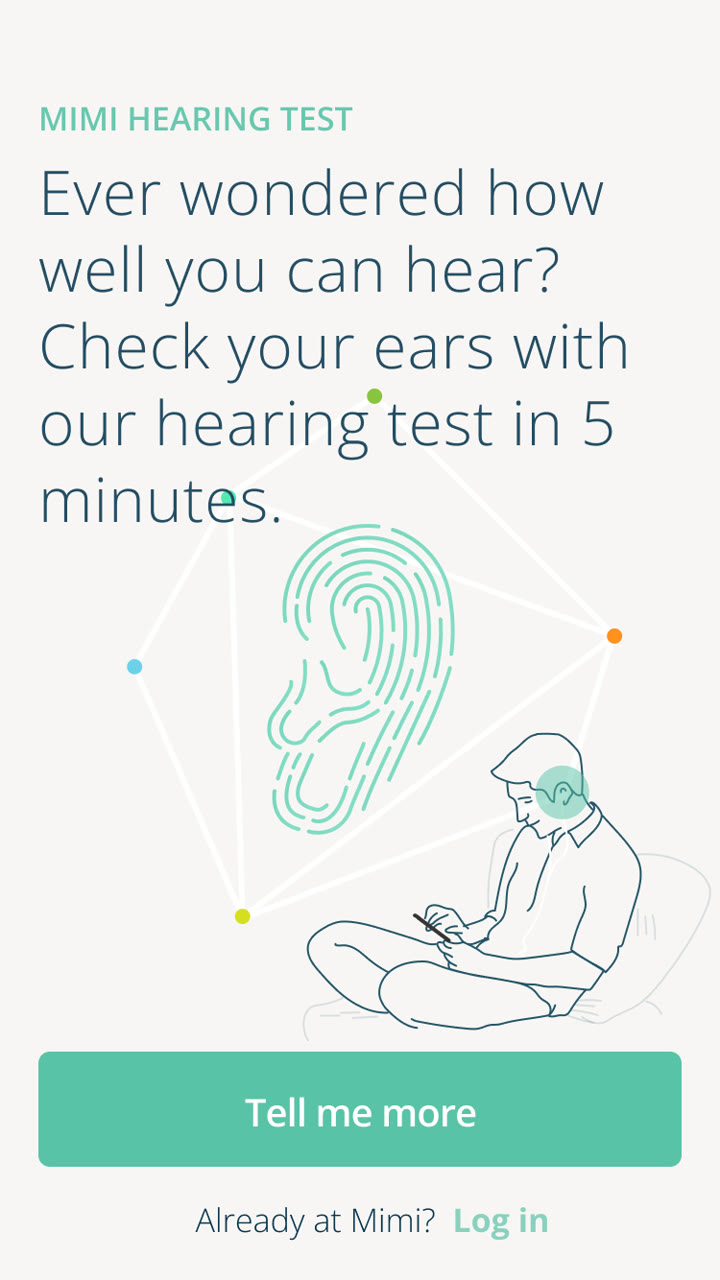
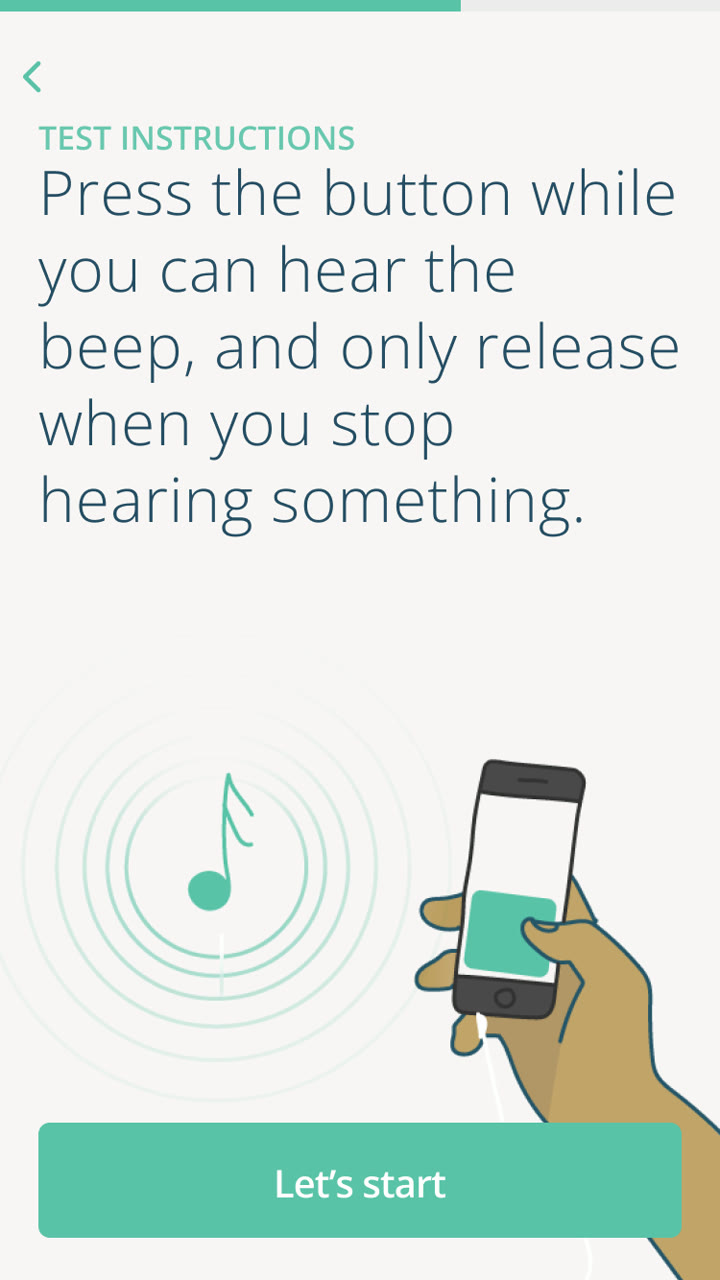
Mimi could test your hearing with an ordinary phone and ordinary headphones. The measurement was solved. But there’s no clinician on a phone, the room is noisy, and most people gave up. Our job was to get them to the end.
02 · The insight
People wanted better music.
We did more than 250 interviews and watched people start, quit and restart the test. Few of them wanted a hearing check. Most wanted their music to sound better. So that became the deal: take the test, and Mimi Music tunes your music to your ears.
03 · Four versions
Every version fixed a spot where people quit.
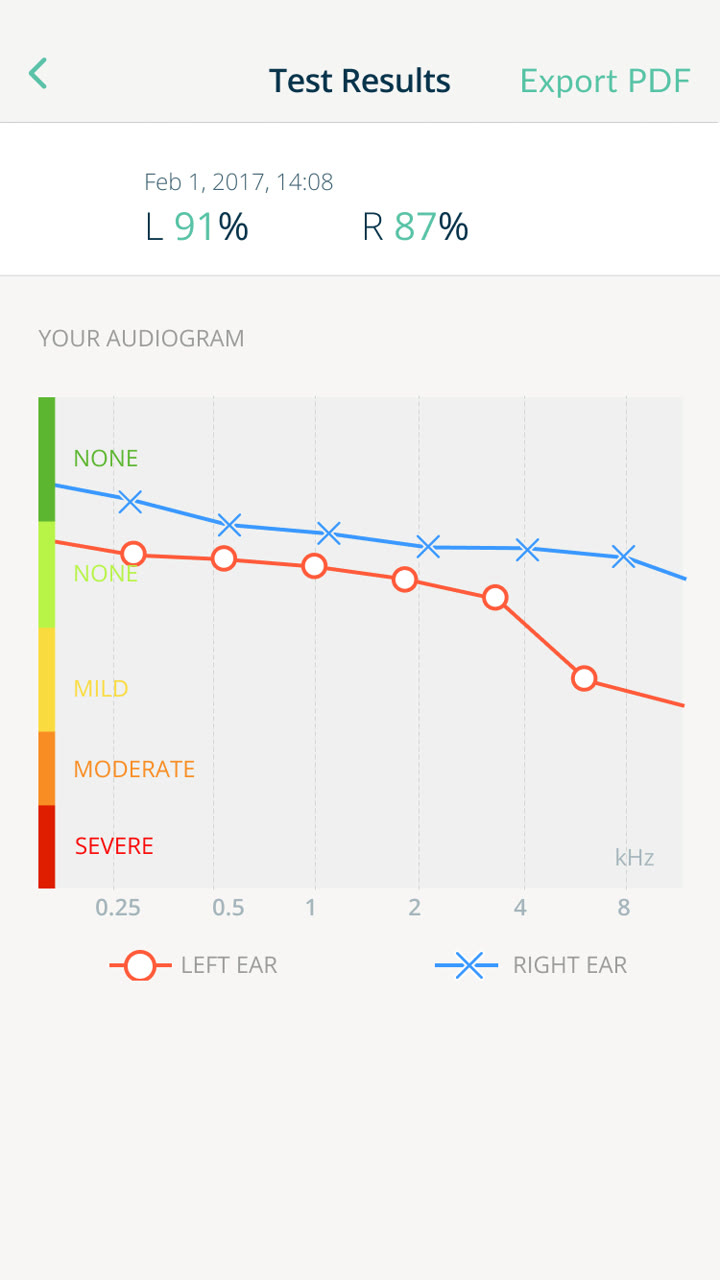
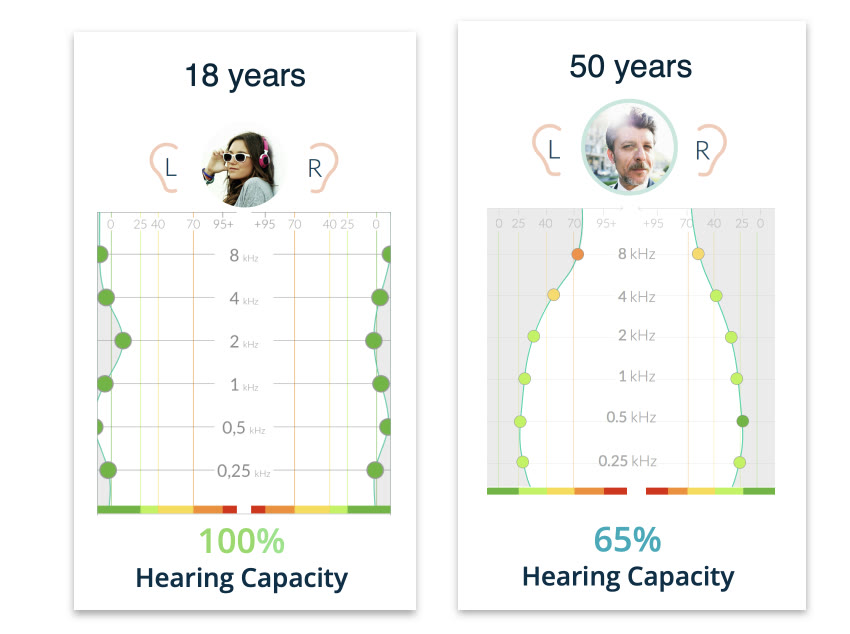
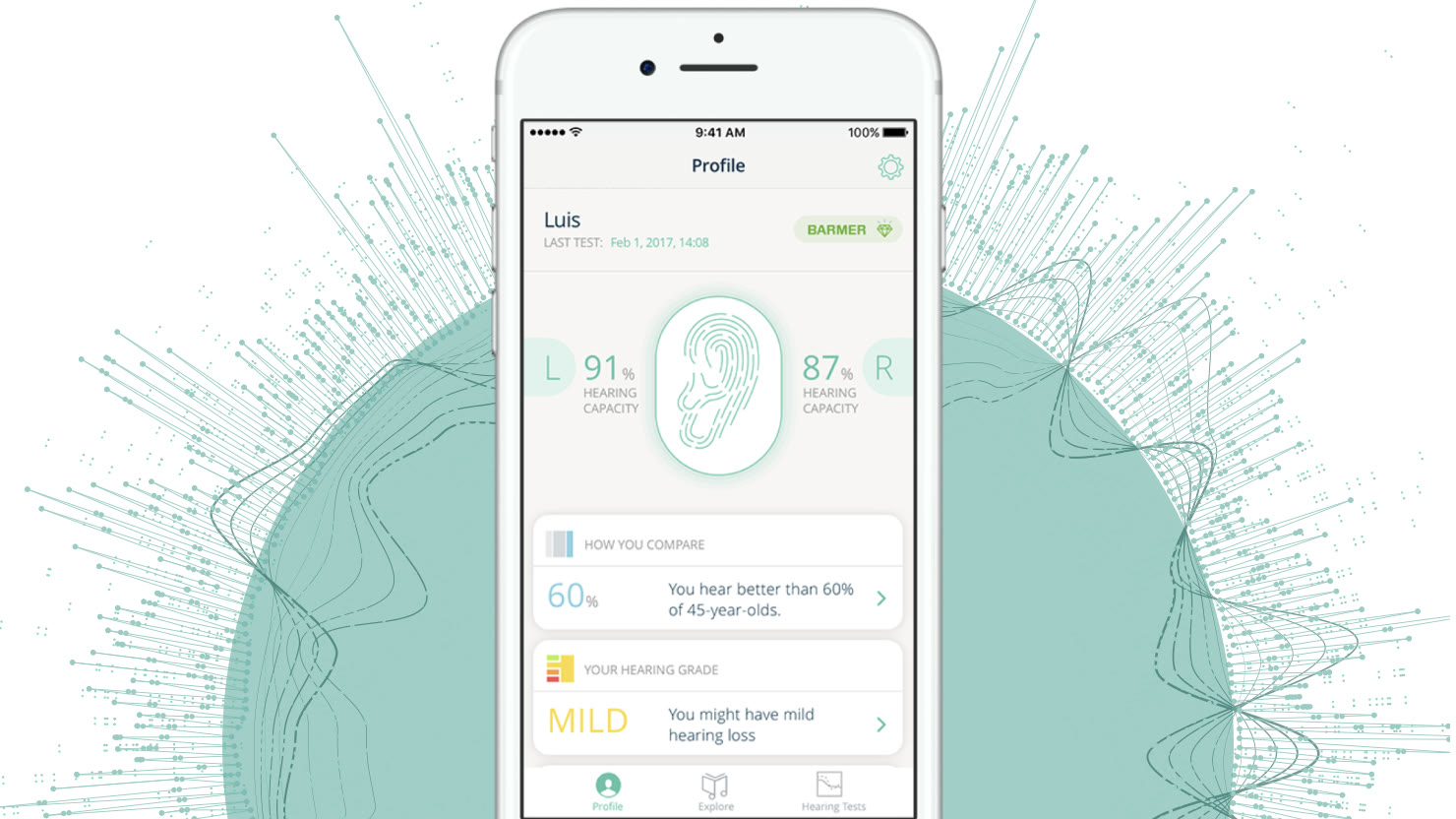
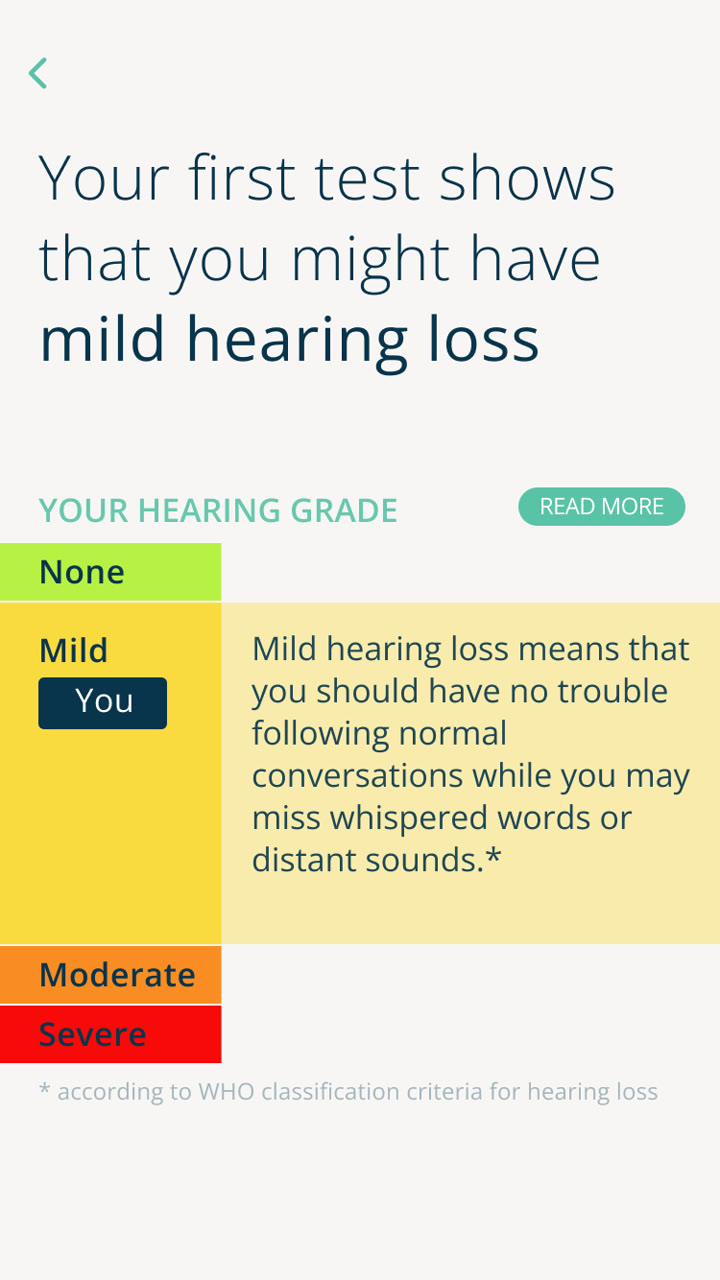
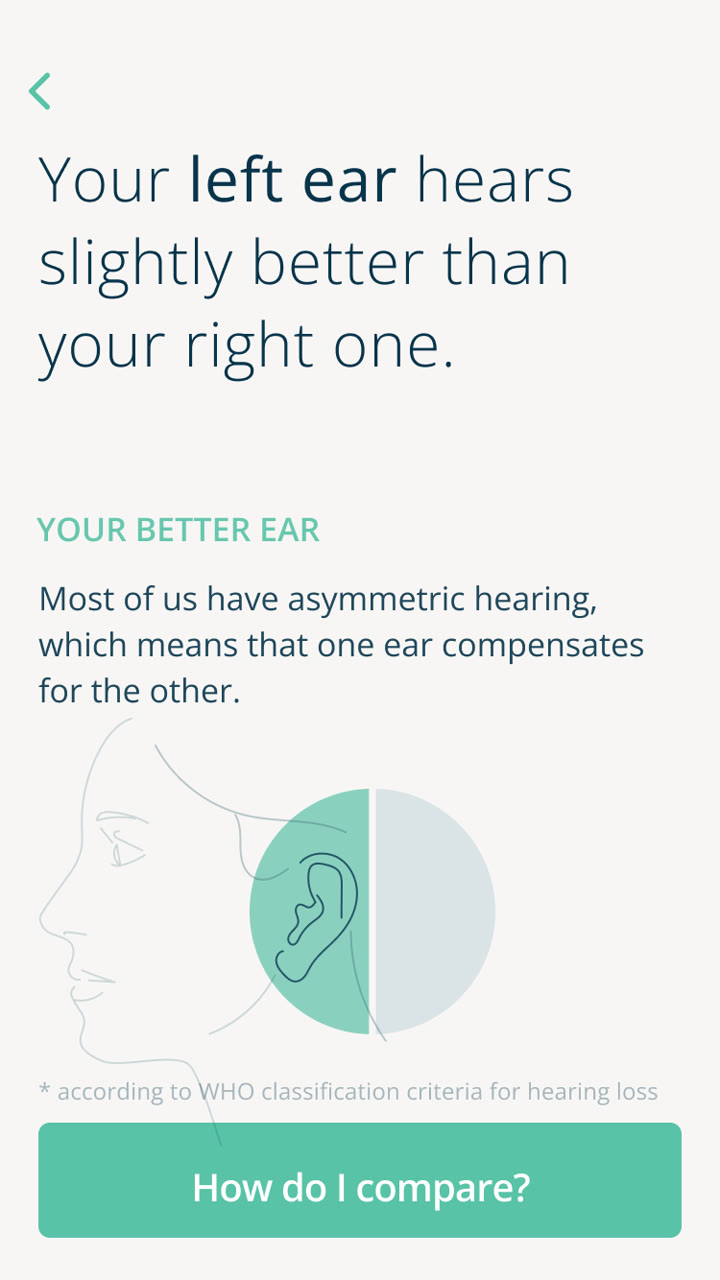
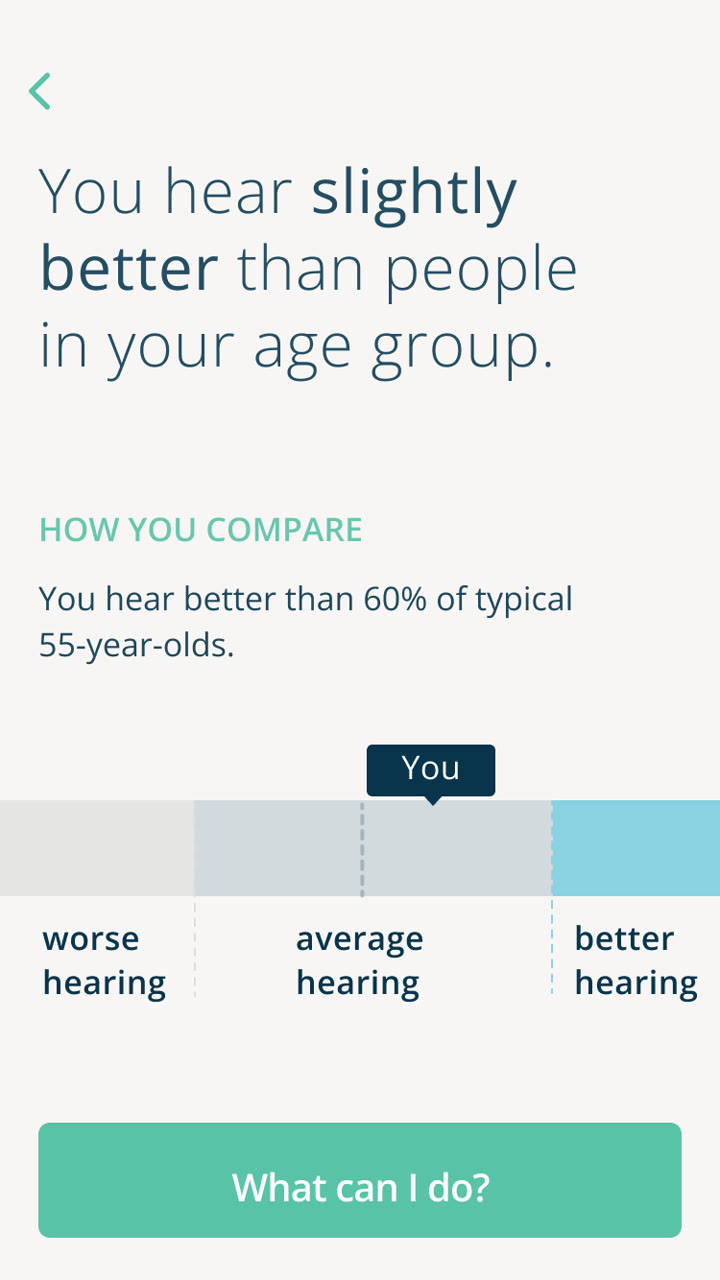
- Results as three questions Do I have hearing loss? Which ear hears better? How do I compare to my age group?
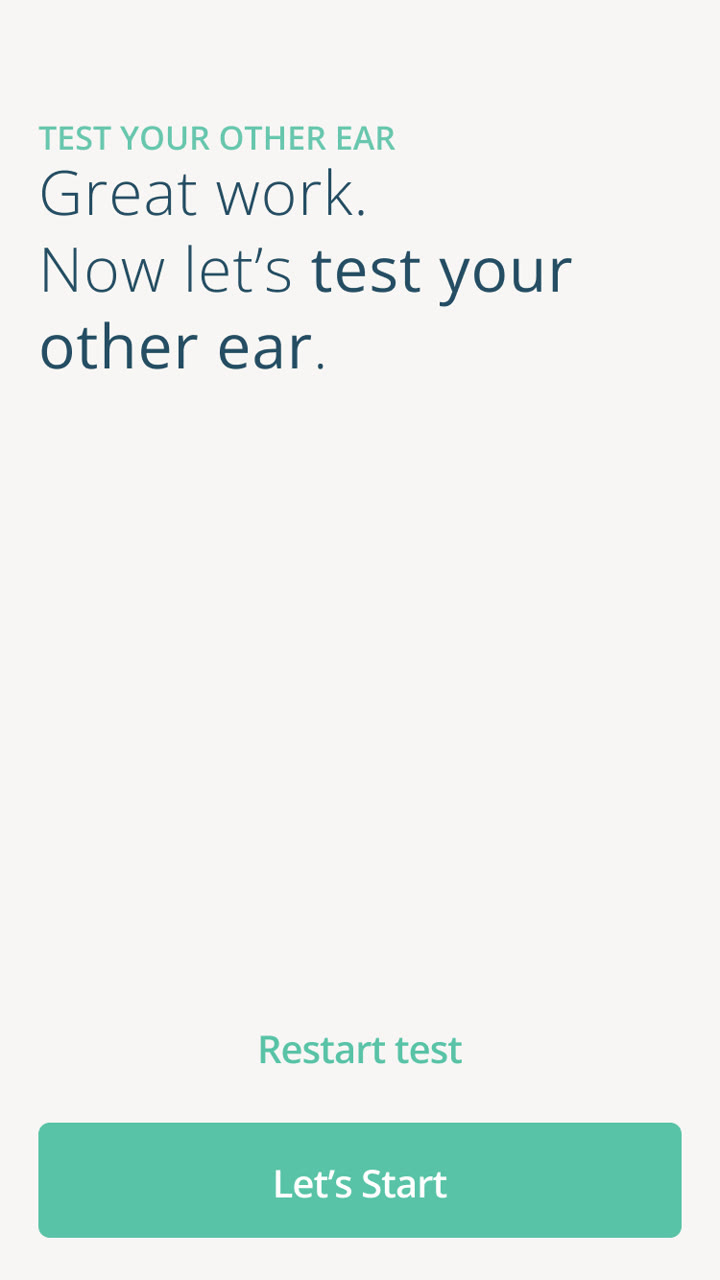
- Each ear tested separately If one ear is worse, you see it.
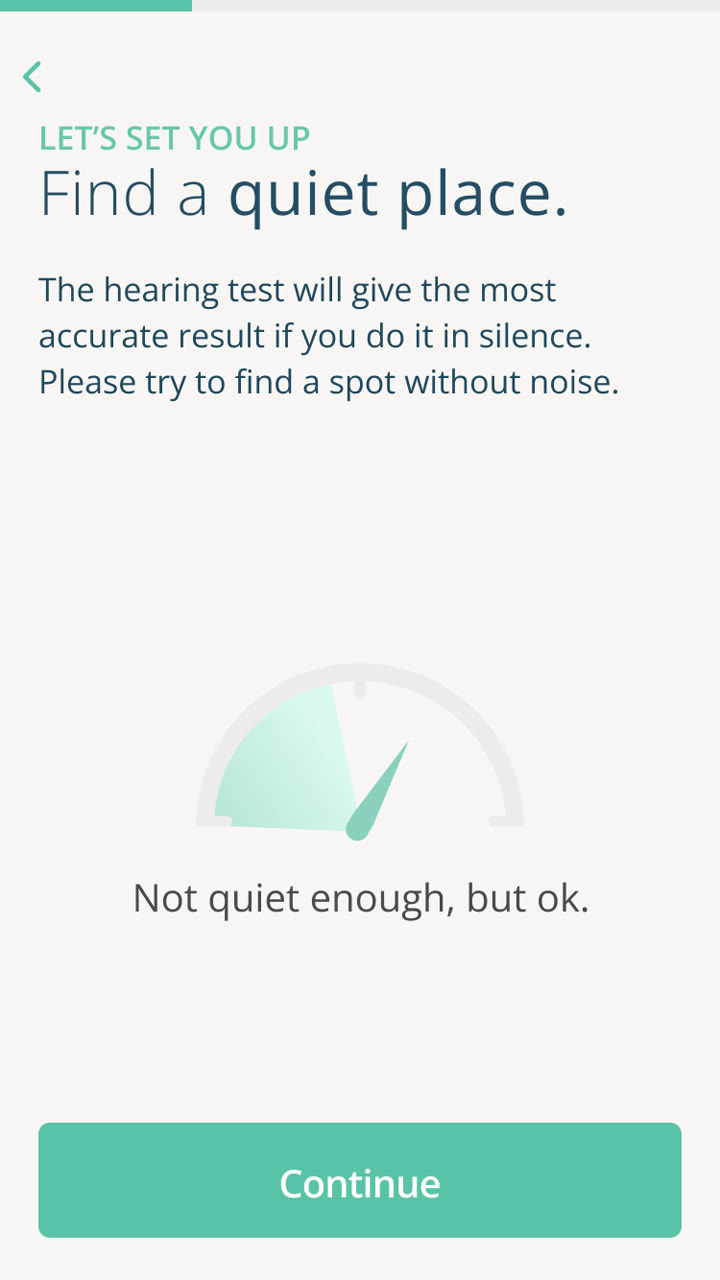
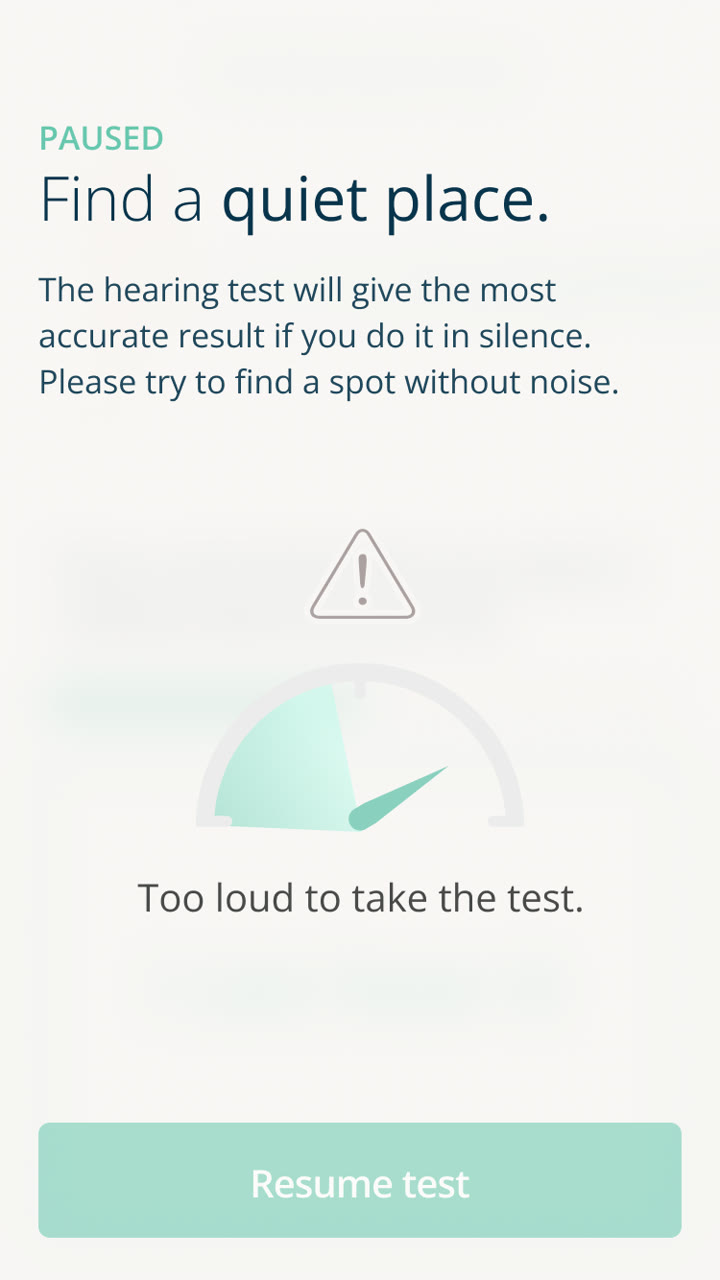
- A noise monitor The test pauses when the room gets too loud.
- A sweeping test method Shorter, calmer, just as accurate.
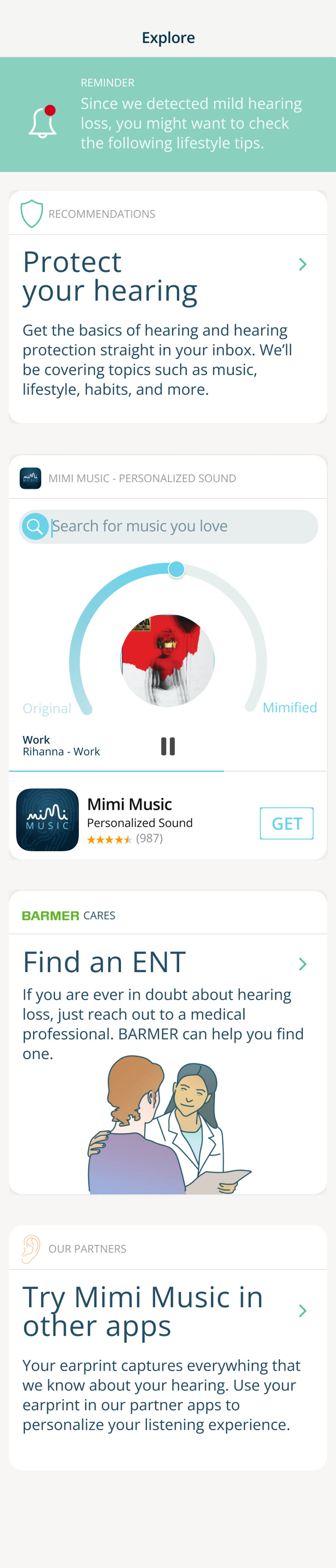
- Something to do after the result Find an ENT, protect your hearing, or personalise your music.
Accuracy · Mimi study
94%
of ears within ±10 dB of clinical audiometry, at five or more frequencies.
BARMER initiative · March 2017
45k
downloads in ten days.
Completion · before → after
34→70%
of people who started the test finished it.
04 · Prevention
Then a health insurer got involved.
You could keep every result and export your audiogram as a PDF for an ENT.
On World Hearing Day in 2017, the German health insurer BARMER and Mimi started a three-month program to catch hearing damage early, mostly in young people. The Charité evaluated it. Our test was the thing people took.